
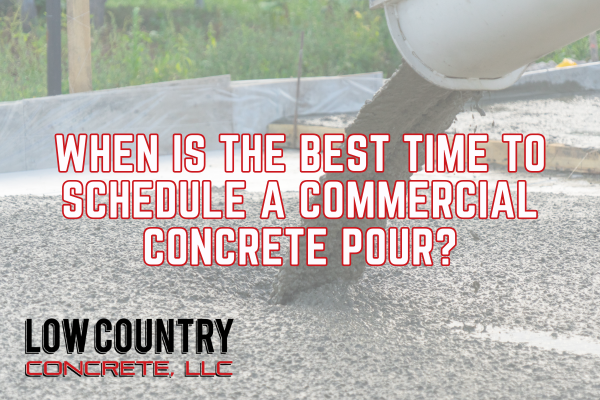
Timing is one of the most important factors in any commercial concrete project. From weather conditions to project timelines, scheduling your concrete pour at the right time can help avoid delays and costly issues. If you’re planning commercial concrete work in the Lowcountry, understanding when to schedule your pour can make the entire process smoother and more efficient.
Why Timing Matters for Commercial Concrete Projects
Concrete doesn’t just get poured and forgotten — it needs the right conditions to cure properly. Temperature, moisture, and site readiness all play a role in the final strength and durability of the slab.
In coastal Georgia and South Carolina, fluctuating winter temperatures and humidity can impact curing times. Scheduling your commercial concrete pour with these factors in mind helps prevent cracking, surface defects, and extended project timelines.
Weather Considerations in the Lowcountry
One of the biggest influences on a commercial concrete timeline is the local climate. While the Lowcountry doesn’t experience harsh winters, cooler temperatures can still slow curing if not properly managed.
Working with an experienced contractor ensures cold-weather precautions are taken when necessary. This is especially important for large-scale projects like foundations or slab work, where proper curing is critical for long-term performance. If your project involves structural elements, timing becomes even more important for safety and durability.
Coordinating Scheduling With Other Trades
Commercial projects often involve multiple contractors working on tight schedules. Concrete pours typically need to happen early in the construction process, especially for foundations and load-bearing slabs.
Planning your pour around site preparation, inspections, and follow-up trades helps avoid downtime. For example, if your project includes foundation work in Georgia, coordinating timelines early can keep everything on track and reduce delays later in the build.
Choosing the Right Time for Your Business Needs
Every commercial project is different. Retail centers, office buildings, and industrial facilities all have unique scheduling demands. Some businesses prefer off-peak seasons to minimize disruption, while others need concrete work completed quickly to meet opening deadlines.
A knowledgeable contractor can help you evaluate your goals and determine the most efficient commercial concrete timeline. If you’re unsure where to start, reviewing past commercial projects and timelines can give you a clearer picture of what to expect.
Low Country Concrete: Helping You Time Your Project Perfectly
The best time to schedule a commercial concrete pour depends on weather conditions, project scope, and coordination with other trades. With proper planning and the right contractor, your project can move forward smoothly and on schedule.
If you’re planning commercial concrete work in the Lowcountry, contact Low Country Concrete to discuss timelines, scheduling, and expert solutions tailored to your project.
Recent Comments