
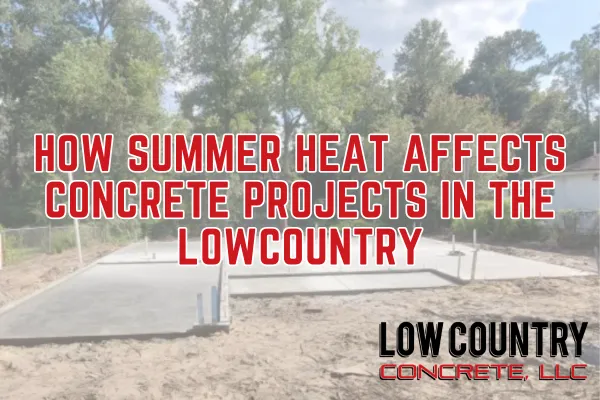
Summer in the Lowcountry brings intense heat, high humidity, and unpredictable storms—all of which can directly impact concrete projects. Whether you’re planning a new driveway, patio, or commercial slab, understanding how these conditions affect concrete is key to getting long-lasting results.
At Low Country Concrete, we work in Savannah, Bluffton, Hilton Head, and surrounding areas year-round, and summer conditions require extra planning, timing, and expertise.
Why Heat Matters in Concrete Installation
Concrete doesn’t simply “dry”—it cures through a chemical reaction that depends on moisture and temperature. In hot weather, this process happens much faster than normal.
While that might sound like a good thing, rapid curing can actually lead to:
- Surface cracking
- Reduced strength
- Uneven finishes
- Shorter lifespan of the concrete
In the Lowcountry, where temperatures regularly climb into the 90s with high humidity, these risks are even more pronounced.
Common Summer Concrete Problems in Coastal Areas
Rapid Moisture Loss
High heat can cause water in the concrete mix to evaporate too quickly. This prevents proper curing and can weaken the surface.
Cracking and Shrinkage
When concrete dries too fast, it shrinks unevenly, leading to cracks- especially in driveways and large slabs.
Finishing Challenges
Hot surfaces and fast set times make it harder to achieve a smooth, consistent finish, particularly for decorative or stamped concrete.
Weather Interruptions
Afternoon thunderstorms are common in the Lowcountry during summer, which can disrupt pours and affect curing conditions.
How Professionals Handle Concrete in Hot Weather
Experienced contractors take specific steps to protect your project during summer months.
Adjusting Pour Times
Most concrete work is scheduled early in the morning or later in the evening to avoid peak heat.
Using Proper Mix Designs
Specialized concrete mixes can help control curing time and improve durability in high temperatures.
Moisture Control Techniques
Contractors may use water sprays, curing compounds, or coverings to slow down evaporation and maintain proper moisture levels.
Careful Project Planning
Weather forecasts are closely monitored to avoid rain disruptions and ensure optimal curing conditions.
These strategies are essential for projects like driveways, patios, and commercial slabs, where durability and appearance matter long-term.
Why Timing Your Project Matters
If you’re considering a concrete project, timing can make a big difference in both quality and scheduling.
Summer is a busy season in the Lowcountry, especially for:
- Residential upgrades like patios and driveways
- Commercial projects preparing for peak business traffic
- New construction and development work
Starting early in the season—or planning ahead—can help you avoid delays and ensure your project is completed under the best possible conditions.
Can You Still Pour Concrete in the Summer?
Yes- concrete can absolutely be installed during the summer, but it requires the right approach.
With proper techniques and experienced crews, summer projects can be just as strong and long-lasting as those completed in cooler months. The key is working with a contractor who understands local climate challenges and knows how to adjust for them.
Why Choose Low Country Concrete
At Low Country Concrete, we specialize in concrete installation across Savannah, Bluffton, Hilton Head, and Beaufort. Our team understands how coastal heat and humidity affect every stage of the process—from mixing to curing.
We take extra steps during the summer months to ensure:
- Proper curing and strength
- Clean, professional finishes
- Long-term durability for residential and commercial projects
Get Your Project Scheduled Before Peak Summer
If you’re planning a concrete driveway, patio, or commercial project, now is the time to schedule. Summer demand fills up quickly, and early planning helps ensure the best results.
Contact Low Country Concrete today to request a quote or schedule your project.
Recent Comments