
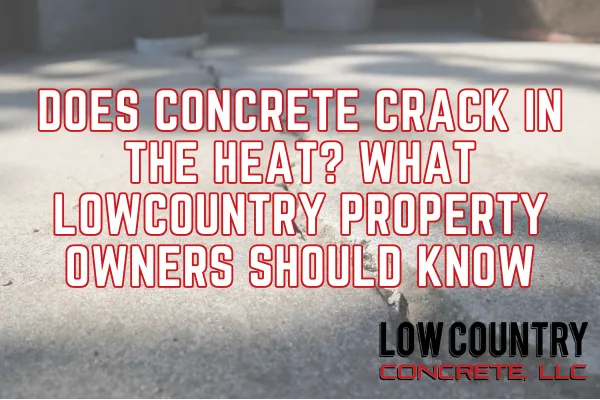
Summer in the Lowcountry brings long days, high temperatures, and plenty of humidity. If you’re planning a new driveway, patio, or commercial concrete project, you may wonder whether extreme heat can damage freshly poured concrete.
The short answer is yes: hot weather can increase the risk of cracking if concrete isn’t installed and cured correctly. However, experienced contractors know how to manage summer conditions to produce durable, long-lasting concrete surfaces.
Here’s what property owners in Savannah, Bluffton, Hilton Head, Beaufort, and surrounding areas should know about hot weather concrete and how to prevent concrete cracking.
Why Does Concrete Crack?
Concrete naturally shrinks as it cures. Small hairline cracks can occur over time and aren’t always a sign of poor workmanship.
Problems arise when concrete loses moisture too quickly during the curing process. Rapid evaporation can weaken the surface before the concrete reaches its intended strength.
High temperatures, direct sunlight, and strong winds all contribute to faster moisture loss, making proper installation especially important during the summer months.
How Summer Heat Affects Fresh Concrete
During hot weather, freshly poured concrete begins losing moisture almost immediately.
If contractors don’t adjust their methods, excessive heat can lead to:
- Plastic shrinkage cracking
- Uneven curing
- Reduced surface strength
- Surface scaling
- Premature wear
These issues are often preventable through proper planning and installation techniques.
How Professional Contractors Prevent Concrete Cracking
Experienced concrete contractors take several precautions when working during the hottest months of the year.
These may include:
- Scheduling pours during cooler morning hours
- Monitoring weather conditions
- Preparing the subgrade properly
- Installing control joints
- Using proper curing methods
- Maintaining adequate moisture during curing
Each step helps the concrete cure evenly and develop maximum strength.
Why Proper Site Preparation Matters
Cracking isn’t caused by weather alone.
Poor soil conditions, inadequate base preparation, drainage issues, and insufficient reinforcement can all contribute to future problems.
Before any concrete is poured, contractors should evaluate:
- Soil stability
- Drainage patterns
- Base compaction
- Reinforcement needs
- Expansion joint placement
These factors help ensure long-term performance, even in the Lowcountry’s challenging climate.
What Property Owners Can Do
While installation is the contractor’s responsibility, property owners also play a role in protecting new concrete.
Avoid placing heavy loads on fresh concrete before it has fully cured. Follow your contractor’s recommendations regarding curing time, sealing, and maintenance.
Keeping concrete clean and addressing minor issues early can also help extend its lifespan.
Trust Low Country Concrete for Summer Installations
Hot weather doesn’t have to mean cracked concrete. With proper planning, professional installation, and careful curing, concrete performs exceptionally well throughout Savannah and the surrounding Lowcountry.
Whether you’re installing a driveway, patio, parking lot, or commercial slab, Low Country Concrete understands how local weather conditions affect every project.
Contact Low Country Concrete today to discuss your next project and learn how we help homeowners and businesses build durable concrete surfaces designed to last.
Recent Comments